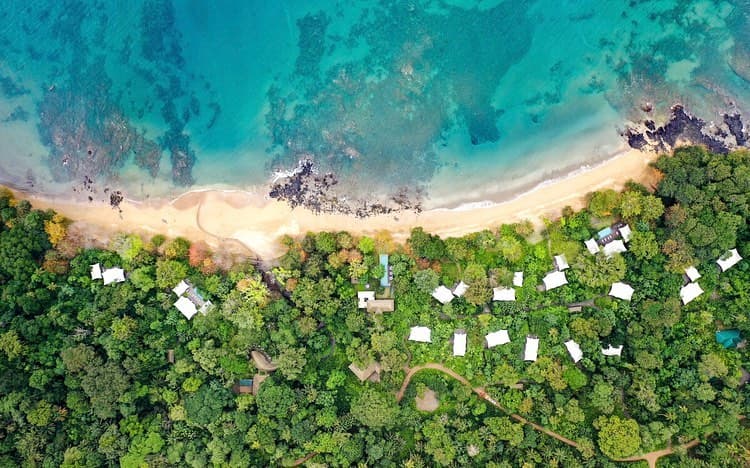
In the south of São Tomé lives a people who carry Angola in their name, their language and their memory. This is the story of the Angolares: where they came from, how they resisted and where to meet them today.
In the south of São Tomé island, between the forest and the sea, lives a people with a unique history in Africa: the Angolares. They carry Angola in their name, their language and their memory. They are canoe fishermen who know the sea and the forest, descendants of men and women who chose to be free on an island where almost everyone was enslaved.
For visitors from Angola, travelling to the land of the Angolares means rediscovering a piece of their own history, on the other side of the sea.
What does «Angolares» mean?
«Angolares» literally means the people of Angola. It is the name given to the people who live mainly in the south of São Tomé island, around the town of São João dos Angolares, in the district of Caué.
And it is not just the name. The Angolares call their own language Ngola: the same word that gave Angola its name, the title of the kings of the ancient kingdom of Ndongo.
Enjoying this article?
Get the day-by-day trip programme, with dates and prices
Sao Tome and Principe Tours: 8-Day Private Trip with a Local Guide8 days / 7 nightsfrom 1,250 €
Where did the Angolares come from?
There are several explanations, and historians still debate which one is right.
The shipwreck legend
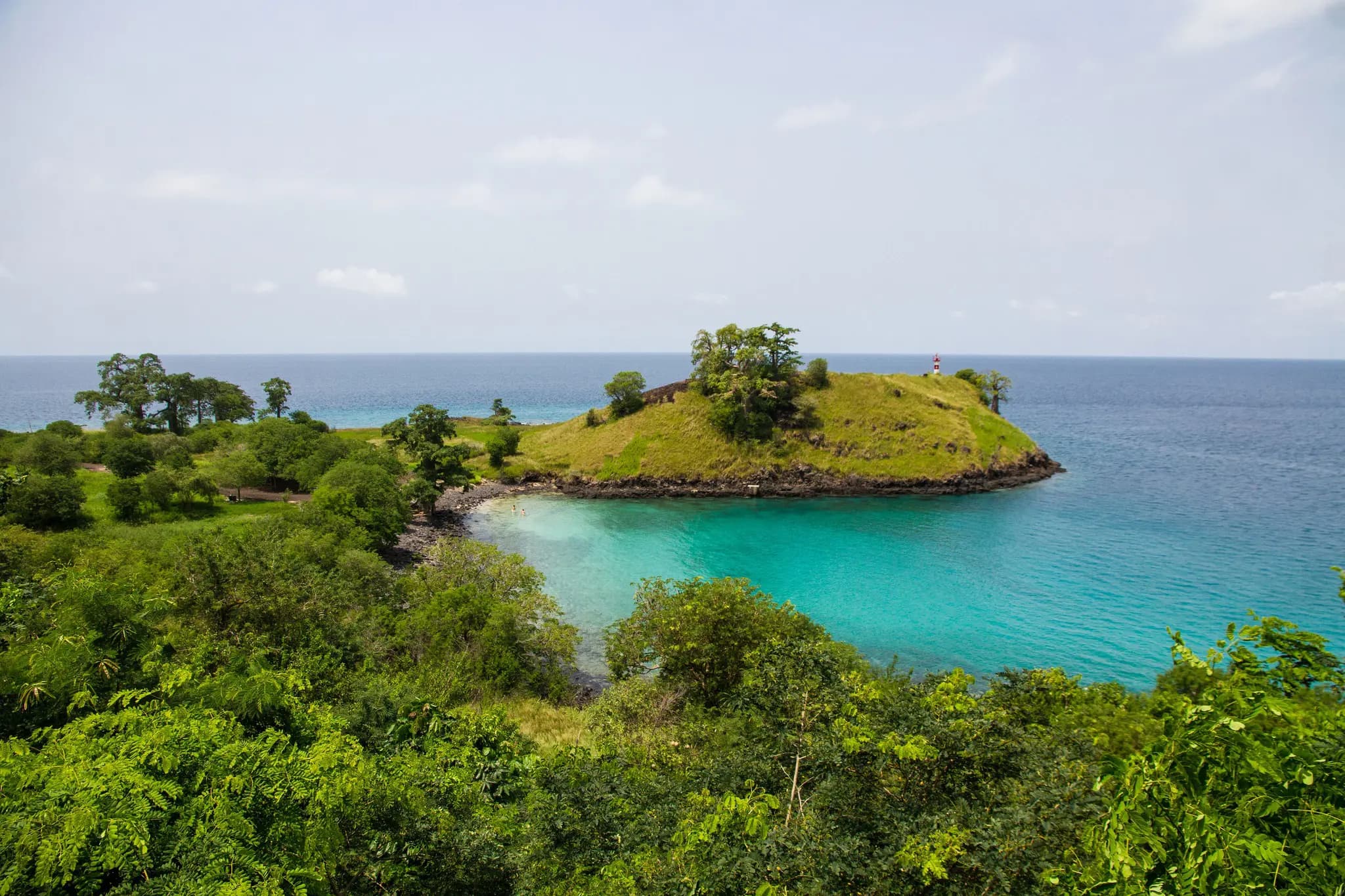
Tradition says that around the middle of the 16th century, a ship carrying enslaved Africans from Angola was wrecked near the Sete Pedras, the rocks off São Tomé's southern coast. The survivors swam ashore and hid in the southern forest, where the colonists never reached. There they built free communities, far from the plantations.
Those who fled the plantations
Other historians argue that the Angolares descend mainly from enslaved people who escaped the island's sugar-cane plantations and took refuge in the south, gradually coming together as a single community.
A third hypothesis
Some also argue that part of these communities was already living on the island, having come from the mainland, before the Portuguese arrived. There is no definitive proof, so all three explanations remain open.
What the language tells us
Whatever the exact origin, the Ngola language bears a clear mark of Angola: it has many words of Kimbundu origin, the language of the Ambundu people of northern Angola and the Luanda region. It is living proof that the Angolares' Angolan roots are real.
Centuries of resistance and freedom
For a long time the Angolares lived as a free people in the forests of southern São Tomé, with their own leaders, remembered in tradition as the kings of the Angolares. They raided the colonists' plantations and towns and freed enslaved people, and for generations no force managed to subdue them.
This resistance is part of the whole country's history. On 9 July 1595, Amador, with the support of the Angolares, led the largest slave revolt in São Tomé's history, was proclaimed king and controlled the island for months. He was captured and executed by the Portuguese on 4 January 1596. Today King Amador is a national hero of São Tomé and Príncipe, and 4 January is a public holiday in his honour.
For an Angolan, it is hard not to feel proud: a people with roots in Angola kept their freedom, their language and their identity for centuries, on an island built on slavery.
The Ngola language
Ngola (also called the Angolar language) is one of the creole languages of São Tomé and Príncipe, alongside Forro and Príncipe's Lung'ie. It is spoken by the Angolar communities in the south of the island. Like all small languages, it needs young speakers to stay alive. Hearing it in a conversation between fishermen is one of the most special moments of a trip to the south.
The Angolares today: masters of the sea
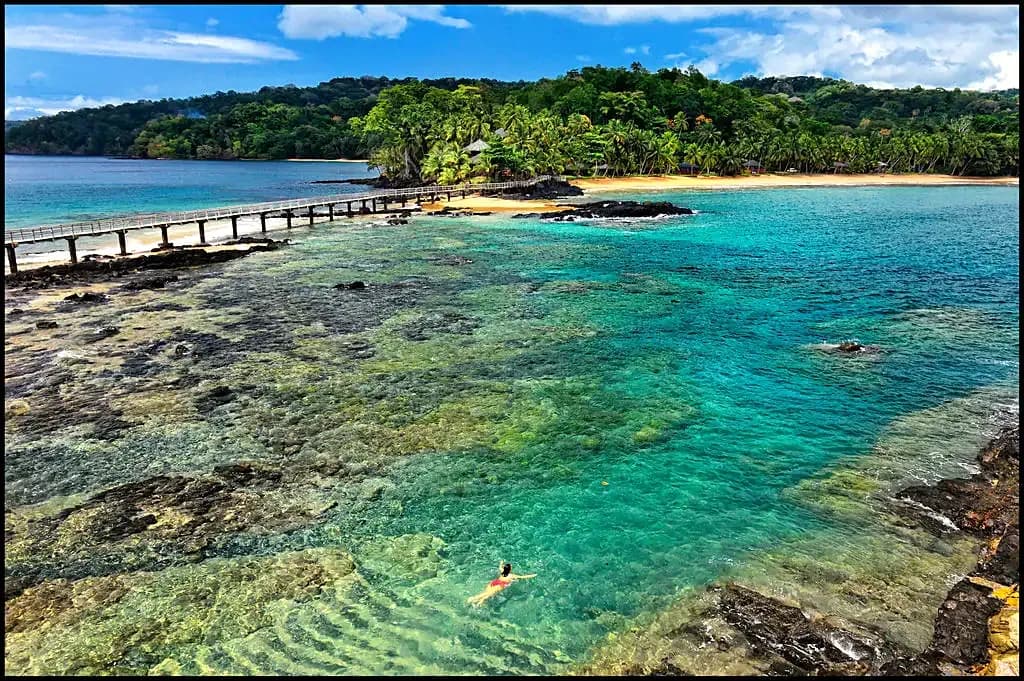
The Angolares are known as the best fishermen in São Tomé. They set out at dawn in dugout canoes carved from a single trunk and come back with the fish that ends up on tables all over the island. The southern beaches, with canoes lined up on the sand, are among the most beautiful sights in the country.
Where to meet the Angolares
- São João dos Angolares: the main town, on a bay in the south of the island. You can see the fishermen's daily life, the canoes and the fish market.
- Roça São João dos Angolares: the town's old plantation is now a guesthouse and the restaurant of chef João Carlos Silva, who reinvented São Tomé cuisine. The tasting lunch, overlooking the bay, is one of the highlights of our Food Route.
- Angolares Waterfall: a waterfall in the middle of the forest near the town, great for a swim.
- The road south: it passes Roça Água Izé and Sete Ondas Beach and continues to Pico Cão Grande and the villages of Monte Mário and Malanza.
On our trips, the day in the south always includes a stop at São João dos Angolares. See our São Tomé and Príncipe trips and our guide to traditional São Tomé food.
Frequently asked questions
The leader of the 1595 revolt in São Tomé, supported by the Angolares. He was executed on 4 January 1596 and is now a national hero; 4 January is a public holiday in his honour.
It means «the people of Angola». It is the name of the people living in the south of São Tomé island, whose origin tradition links to Angola.
Tradition tells of the wreck of a ship carrying enslaved people from Angola, in the 16th century, near the Sete Pedras. Other historians argue they descend from enslaved people who fled the plantations. The Ngola language has many words of Kimbundu origin, from Angola.
Ngola, or the Angolar language, a creole with many words of Kimbundu origin.
Mainly in the south of São Tomé island, around São João dos Angolares, in the district of Caué.